Emotion Focused Formulation (CCC): A Practical Guide
Assistant psychologist · 30 September 2026
Reviewed by Tarun Vermani, Trainee Clinical Psychologist
An Emotion Focused Formulation (EFF) is a simple, collaborative map built around the feelings a person finds hardest to bear. It is also known as a Comprehend, Cope and Connect (CCC) formulation, after the approach developed by clinical psychologist Isabel Clarke. The most painful feelings go in the centre. Around them you map what triggers those feelings now, where the person first learned them, what they do to cope, and how that coping can keep the feelings going. Strengths, ways out and goals complete the picture.
Because it starts from what the person feels right now rather than from a diagnosis or a chain of thoughts, it can be built with someone whose mind is too overwhelmed for more abstract formulation. This guide covers what the formulation is, who it suits, how to build each part with a client, a worked example, and how to use it safely. It is written for therapists and trainees.
What is an emotion focused formulation?
An emotion focused formulation connects three things: a person's past experiences, their present emotional state, and the things they do to cope. It treats emotion as the route into the work, not as a symptom to be managed.
The central idea is that a current trigger activates a core, painful feeling that has roots in earlier experiences. That feeling is so hard to tolerate that the person reaches for ways to escape it, such as withdrawing, getting angry or working harder. These strategies bring real short-term relief, which is why they stick. Over time, though, they often keep the painful feeling alive.
Mapping this together tends to shift the conversation from "what is wrong with me?" to "this makes sense, given what I have been through and what I have had to cope with".
Where it comes from and who it is for
Isabel Clarke developed the approach in acute mental health services, where it has been used since the mid-2000s (Clarke, 2015). It sits within the wider Comprehend, Cope and Connect approach, which combines an understanding of past trauma and adversity with mindfulness- and compassion-based ways of coping (Clarke & Nicholls, 2017).
It was designed for people whose coping resources have been overwhelmed by current stress and past trauma, for example:
people on acute psychiatric inpatient wards
people using crisis and home treatment services
people in community mental health teams, especially with complex trauma histories
Traditional formulations often ask a client to hold several abstract ideas at once, such as core beliefs, rules for living and chains of automatic thoughts. In acute distress that can be too much. An emotion focused formulation starts with something the person already knows well: how bad it feels. Validating that experience, and the ways they have found to survive it, can itself help to lower the temperature. It also reframes crisis behaviour as an understandable, short-term attempt to cope with an unbearable internal state, which can reduce stigma for the client and the team around them.
The same map works as a shared team formulation, so ward staff can understand and respond to the person consistently.
The core assumptions
The formulation rests on a few simple ideas:
Emotions make sense in context.
Behaviour serves an emotional function.
Emotions organise how we experience the world and how we act.
Difficulties often come from unmet emotional needs, avoiding emotion, or emotional lessons learned in harmful circumstances.
How to build the formulation, step by step
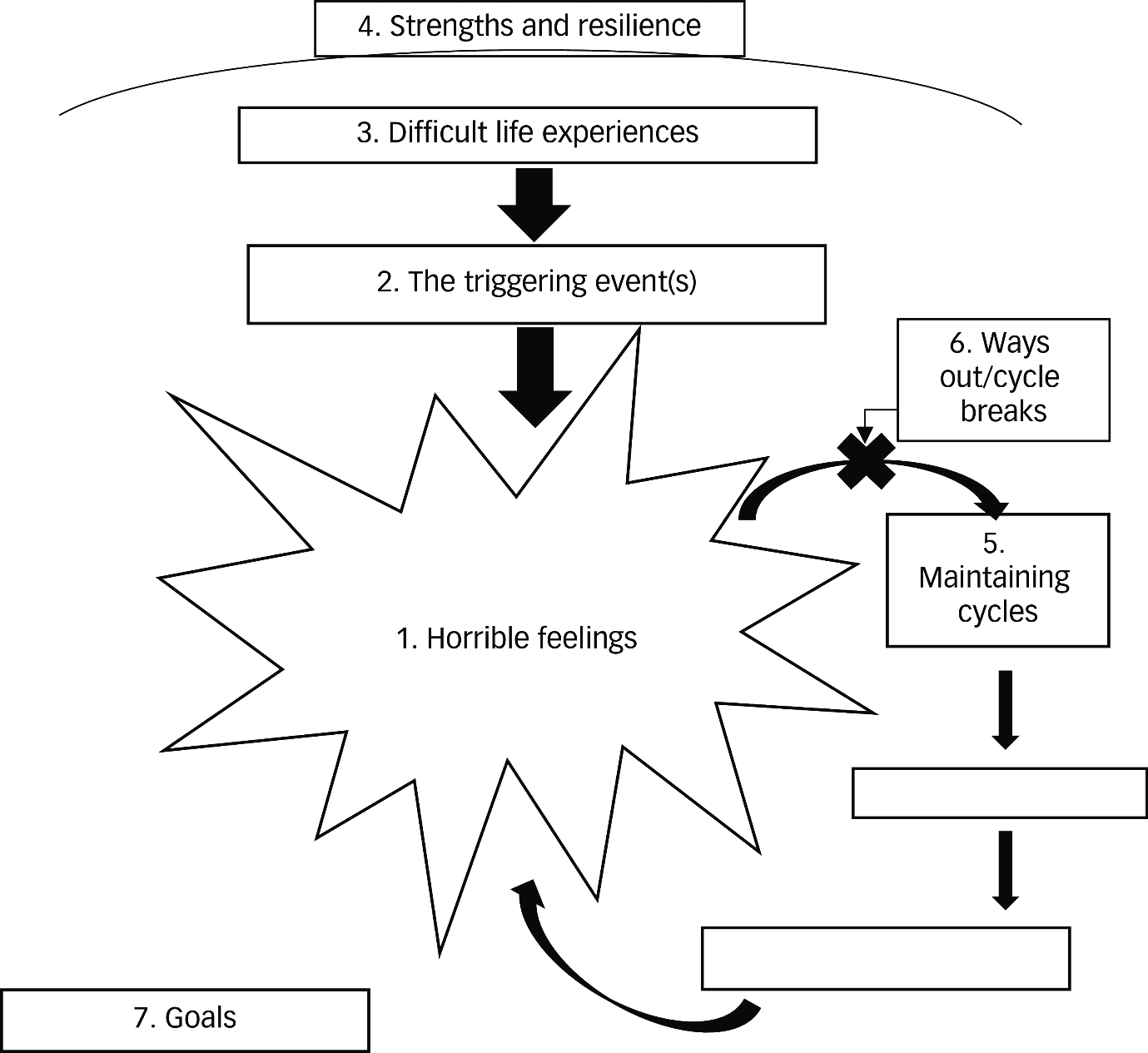
Build the map in the order below, one layer at a time. Use the client's own words wherever you can, and go at their pace. On a whiteboard or paper, the horrible feelings sit in the middle inside a spiky shape, to show how painful they are. Step through the tabs to see the map grow; each new layer is shown in amber.
Building an emotion focused formulation
1. The horrible feelings
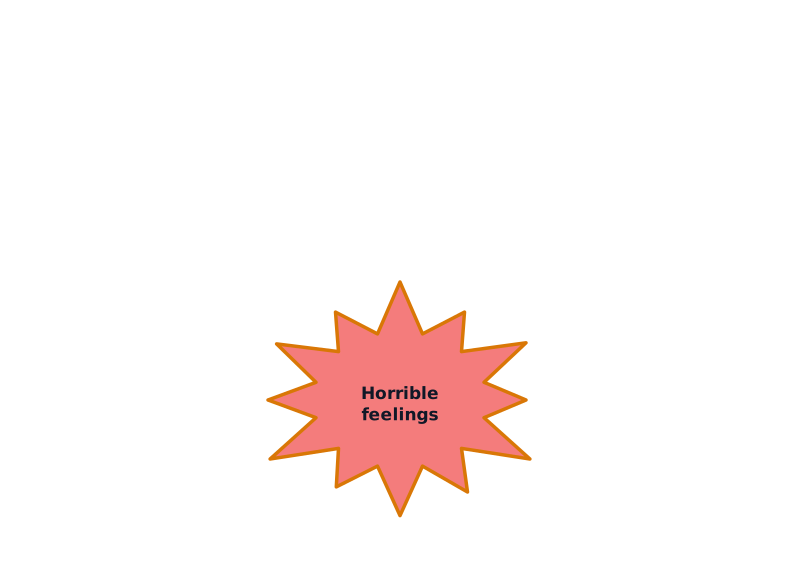
Start in the centre. Ask:
What are the worst feelings that show up for you?
Which feelings are you trying hardest to avoid?
When things are at their very worst, what do you feel?
Common answers include shame, worthlessness, rejection, loneliness, fear, guilt, feeling trapped and feeling not good enough.
2. The recent trigger
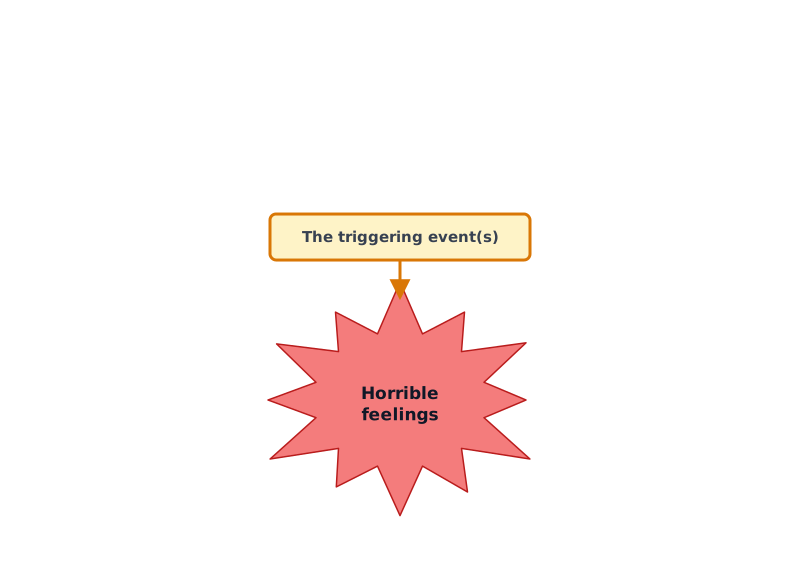
Next, find what has set these feelings off recently. Ask what happened before they felt this way, what kinds of situations tend to bring the feelings up, and what has made things worse lately. Triggers are often interpersonal: a partner not texting back, criticism from someone, being left out, a mistake at work, conflict or feeling ignored.
It helps to ask what the trigger seemed to mean about them, for example "nobody replied" meaning "I'm not wanted". That meaning is often the bridge between an ordinary event and an overwhelming feeling.
3. Difficult life experiences
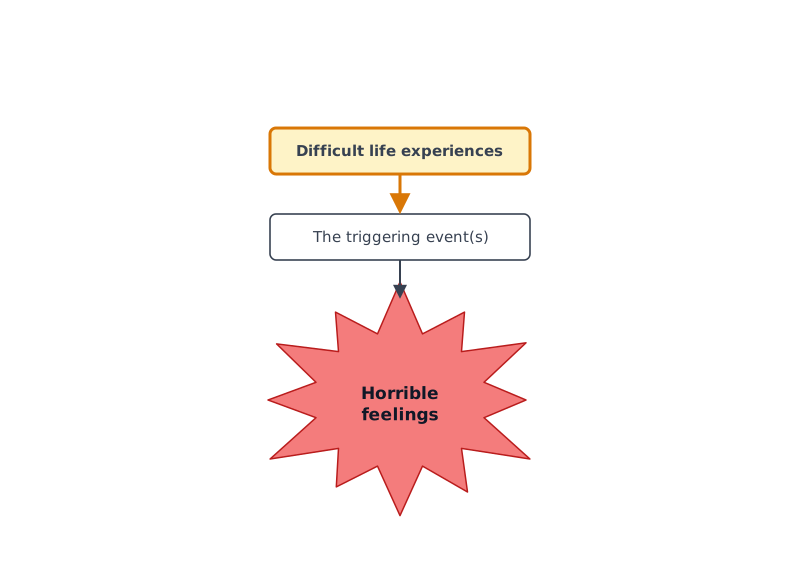
Now look back: when have these feelings shown up before? You are looking for the experiences that taught the person these emotional lessons. Ask when they remember first feeling this way, who or what helped them learn it, and what experiences make these feelings make sense.
These might include bullying, emotional neglect, critical parenting, family conflict, rejection by peers, abuse or loss. If the current trigger is "feeling ignored", the historical link might be having been overlooked by parents. This section goes above the trigger, with arrows running down into the centre.
4. Strengths and resilience
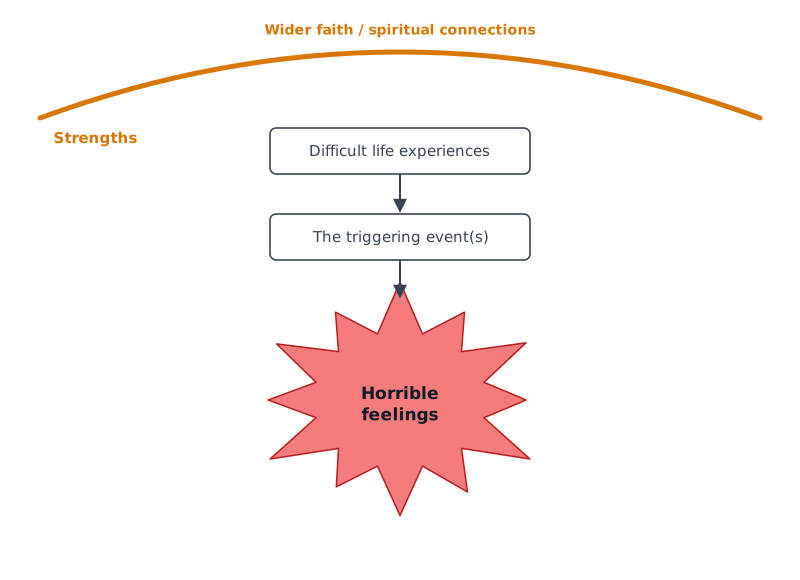
This is the person's protective factors, and it is not an afterthought. Explore what they are good at, what they enjoy, what they care about and which relationships are solid. Write these in a curve over the top of the whole diagram, because they hold and surround everything else.
If faith, spirituality or a wider sense of connection matters to the person, you can write this above the curve. Only include it where it is meaningful to them.
5. The coping strategies
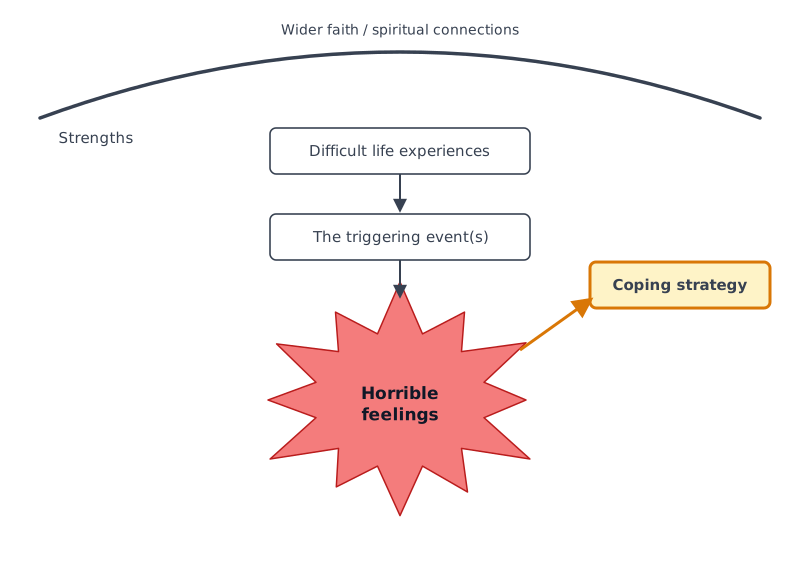
Once you know the horrible feelings, ask: "What do you do to stop yourself feeling those feelings?" The answers are usually drawn as spikes coming out of the centre. They tend to fall into four families:
Moving away: isolation, avoidance, numbing, sleeping.
Moving against: anger, aggression, control.
Moving towards: people-pleasing, reassurance-seeking, over-caring.
Over-functioning: perfectionism, striving for achievement, hypervigilance.
This is often the richest part of the formulation. Many of the problems people come to services with are, in fact, attempted solutions.
6. Short-term benefits
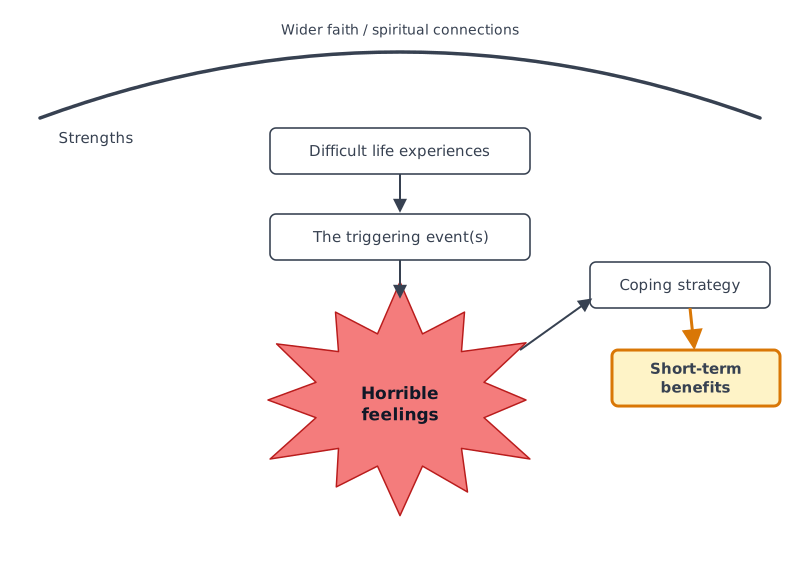
Before looking at any downsides, ask: "How does that strategy help you?" This step keeps the formulation compassionate and stops coping from being dismissed as simply "maladaptive" without understanding what it does. For example:
Perfectionism avoids criticism and brings a sense of certainty.
People-pleasing reduces the risk of rejection.
Anger creates a sense of safety and stops the person feeling vulnerable.
7. Long-term costs
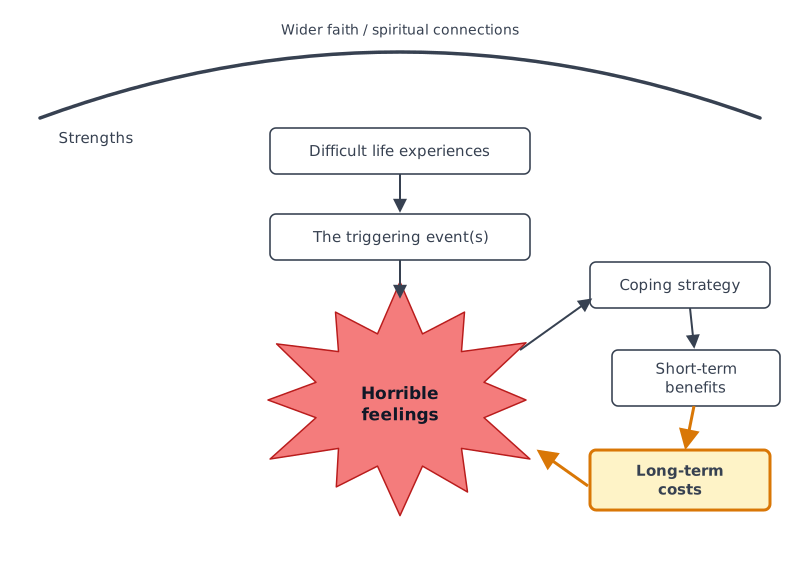
Then ask: "What does it cost you?" People-pleasing might bring acceptance and approval, but at the cost of exhaustion, resentment and relationships that don't feel real. Perfectionism might bring praise and less anxiety, but also burnout and never feeling good enough.
8. The maintenance cycle
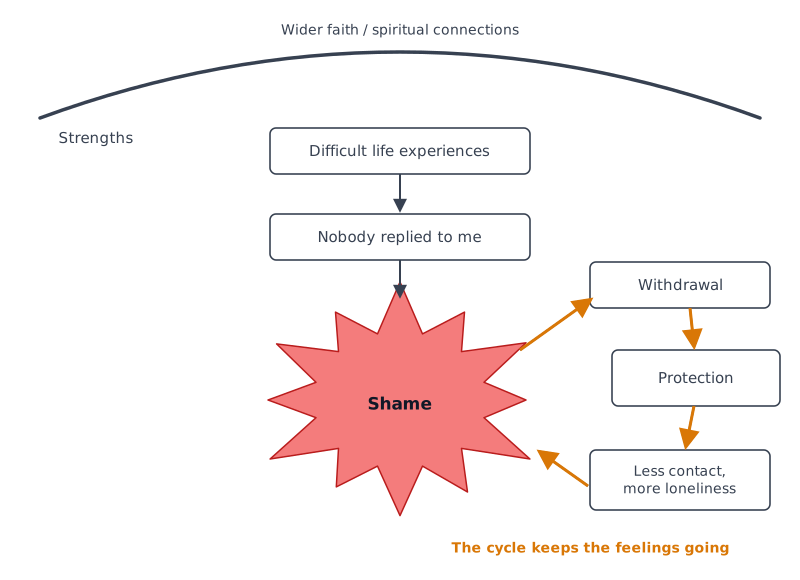
Finally, show how the coping strategy accidentally feeds the horrible feelings. Walk through one cycle slowly:
Trigger: nobody replied to my message.
Meaning: I'm not wanted.
Horrible feeling: shame.
Coping: I withdraw.
Consequence: I have less contact with people.
Outcome: I feel lonelier, and the shame grows stronger.
The last step leads straight back to the centre, which closes the loop. There is often more than one cycle, so add them as they come up. If you want more on how protective behaviours keep problems going, see our guide to safety behaviours in CBT.
9. Ways out
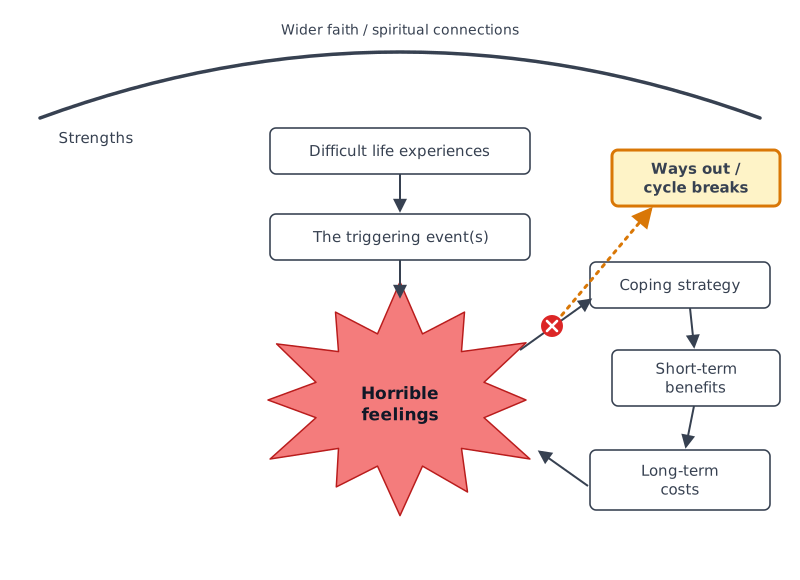
With a cycle on the page, look for points where the person could do something different to break it. There may be more than one cycle, and each can have its own way out. If they notice themselves starting to withdraw, that might be the moment for an opposite action, such as saying yes to one plan, making a phone call or going outside for a walk. Choose together what feels achievable, and draw on the strengths at the top of the map.
10. Goals
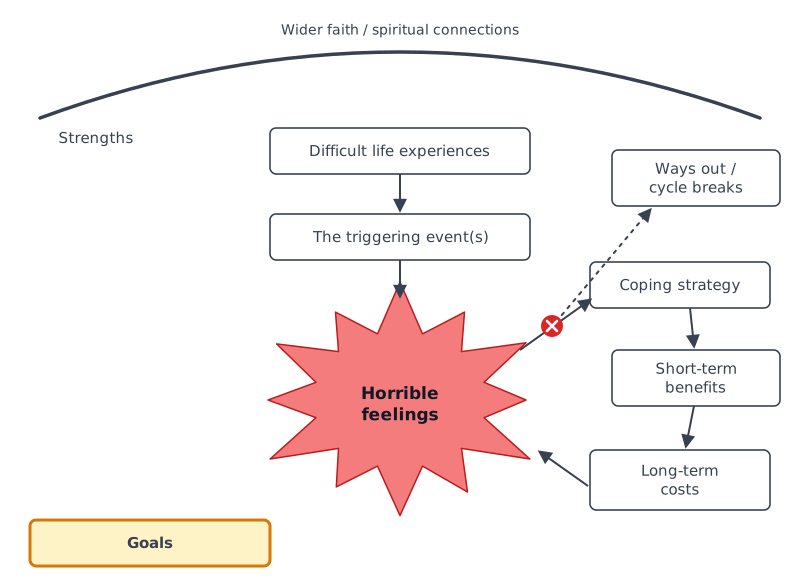
Write the person's goals along the bottom of the formulation, so the map points towards what they want and not only towards the problem.
A worked example
This example is a fictional composite.
Ali was admitted to an acute ward after a relationship ended. The map built with them looked like this:
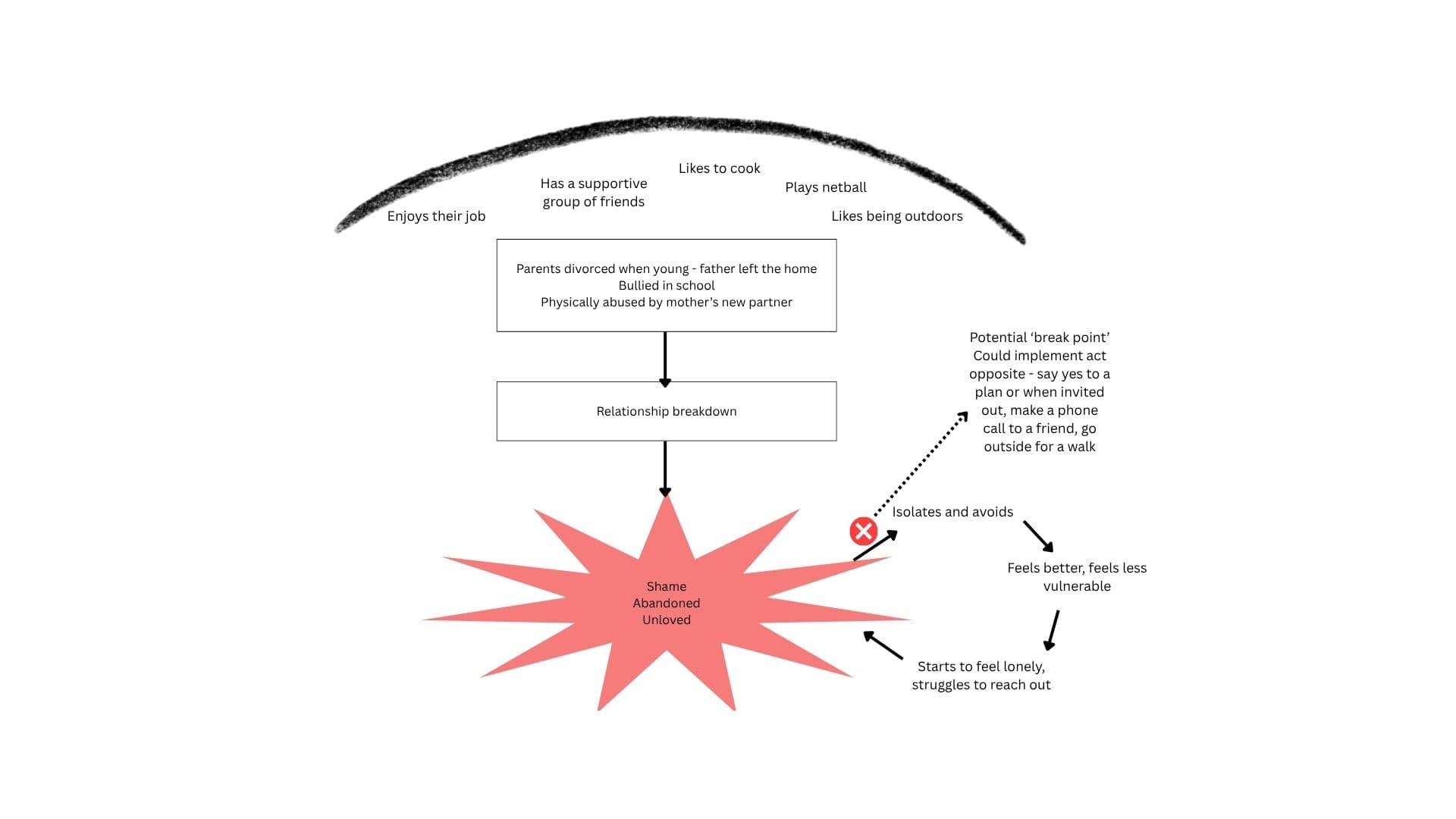
In words:
Horrible feelings (centre): shame, feeling abandoned, feeling unloved.
Recent trigger: the relationship breaking down.
Difficult life experiences: parents divorcing when Ali was young, with their father leaving home; being bullied at school; being physically abused by their mother's new partner.
Coping: isolating and avoiding people.
Short-term benefit: feeling better and less vulnerable.
Long-term cost: starting to feel lonely and struggling to reach out, which leads back to feeling unloved.
Ways out: opposite action when Ali notices they are pulling away, such as saying yes to a plan or an invitation, phoning a friend or going for a walk.
Strengths: enjoys their job, a supportive group of friends, likes to cook, plays netball, likes being outdoors.
Seen together, the map shows why hiding away feels right in the moment and why it keeps Ali stuck. It also shows exactly where the resources are for a way out: the friends, the netball and the outdoors are already there in the strengths.
Interactive worksheet
Emotion Focused Formulation (Comprehend, Cope and Connect)
Put the most painful feelings at the centre, then map the triggers, difficult life experiences, coping cycles, strengths, ways out and goals around them.
The interactive worksheet above follows the same layout, with a worked example and a fillable PDF. Clients can complete it with you in session or at their own pace afterwards.
The six questions, in order
When facilitating the formulation, these six questions keep the conversation moving in the right order:
What are the horrible feelings?
What tends to trigger them now?
What does the trigger mean about you?
Where did you first learn those meanings?
What do you do to avoid or manage the feelings?
How do those strategies accidentally keep the feelings going?
Using it safely in acute settings
A few principles help keep the work safe:
Start with the centre and one cycle. In acute distress, that may be all that is useful in one session. The rest of the map can come later.
Go gently with the history. Exploring difficult life experiences can be activating. Keep the focus on making sense of the present, and don't push for trauma detail unless the setting can hold it.
Check risk. Assess current risk before and after the session, especially if coping strategies include self-harm, substance use or other ways of hurting oneself. Follow your service's risk procedures.
Frame coping as understandable. The aim is to make sense of what the person does, not to blame them for it.
Use supervision. Especially when working with trauma or with a team formulation.
If you want the fuller developmental picture once the person is more settled, a longitudinal formulation can build on the same understanding. For an overview of other approaches, see the complete guide to CBT case formulation.
Frequently asked questions
What is the difference between an EFF and a CCC formulation?
They are two names for the same thing. The Emotion Focused Formulation is the formulation at the heart of Isabel Clarke's Comprehend, Cope and Connect (CCC) approach, so many services call it a CCC formulation. Both put the most painful feelings at the centre and map how coping keeps them going.
Who is an emotion focused formulation suitable for?
It was developed for people in acute and crisis mental health settings, whose coping has been overwhelmed by current stress and past trauma. It also suits community teams, people with complex trauma histories and team formulation. Because it starts from feelings rather than abstract thinking, it is accessible when a person is highly distressed.
How long does it take to build an emotion focused formulation?
A first version, with the horrible feelings and one maintaining cycle, can often be drawn in a single session. The full map, with difficult life experiences, several cycles, strengths, ways out and goals, usually builds up over several meetings. Go at the client's pace, especially in acute distress.
Where to start
Pick one client who is struggling with overwhelming feelings and draw just the centre and one cycle with them. Ask how their coping helps before asking what it costs, then look together for one small way out. The Emotion Focused Formulation worksheet gives you the full layout to fill in together.
Want interactive, model-faithful formulation worksheets you can use in session and assign as homework? Start free →
References
Clarke, I. (2015). The emotion focused formulation approach: Bridging individual and team formulation. Clinical Psychology Forum, 275, 28–32.
Clarke, I., & Nicholls, H. (2017). Third wave CBT integration for individuals and teams: Comprehend, cope and connect. Routledge.
This article is for qualified therapists and trainees and is educational, not clinical advice. The tools described support therapy delivered by a trained clinician and are not a substitute for assessment, supervision or clinical judgement. The example is a fictional composite. If you or a client are in crisis, contact local crisis services, NHS 111 or 999, or Samaritans on 116 123.
For use alongside professional support
Formulate provides educational CBT resources for use with a qualified therapist. They are not a substitute for professional assessment, diagnosis, or crisis care.
If you need urgent help now:
- Emergency services: 999 — if you or someone else is in immediate danger
- Samaritans: 116 123 — free, day or night, 365 days a year
- SANEline: 0800 689 5555 — 4:30pm–10:30pm, every day
Try it yourself
Interactive worksheets from this article
Open one in your browser — no sign-up needed — and see exactly what your client experiences.
Assistant psychologist
Bringing creativity and a focus on accessibility to clinical resources.
About Tassyana Jenkins →